Last updated 30/07/2026
Which CFD trading platform is best for beginners and professionals?
Short answer: The best CFD trading platform depends on your experience, preferred markets, and trading style. Popular choices such as MetaTrader 4, MetaTrader 5, TradingView, cTrader, and ZuluTrade offer different strengths—from advanced charting and automation to social trading and multi-asset access.
Best CFD Trading Platforms for Beginners and Professionals
Contracts for Difference (CFDs) have become one of the most accessible ways to trade global financial markets. Instead of buying the underlying asset, traders speculate on whether its price will rise or fall. This allows traders to participate in markets such as forex, stocks, indices, commodities, and cryptocurrencies without owning the asset itself.
Because CFDs provide leveraged exposure to global markets, choosing the right trading platform is essential. A good CFD trading platform helps traders analyze price movements, execute trades efficiently, and manage risk effectively.
For beginners, the ideal platform should be easy to navigate and offer educational tools and demo accounts. Experienced traders often look for advanced charting tools, automation features, and fast execution speeds.

Understanding CFD Trading Platforms
A CFD trading platform is the software that connects traders to financial markets. Through this platform, users can analyze price charts, place orders, manage positions, and monitor market movements in real time.
Most modern platforms include features such as technical indicators, customizable charts, and automated trading tools. These capabilities allow traders to develop and test strategies based on historical data and current market trends.
For beginners, usability and reliability are usually the most important factors. A clear interface and helpful tutorials can make the learning process much easier. Experienced traders, however, may prioritize features such as algorithmic trading, advanced order types, and integration with external tools.
Ultimately, the best platform is one that fits your trading style and gives you the tools needed to analyze markets and manage risk effectively.
Top CFD Trading Platforms
Several trading platforms dominate the CFD trading industry. Each offers unique features designed for different types of traders.
MetaTrader 4 (MT4)
MetaTrader 4 remains one of the most widely used trading platforms in the world. It has been a favorite among forex and CFD traders for many years thanks to its stability, simplicity, and extensive community support.
Key Features
- Advanced charting and technical analysis tools
- Support for automated trading through Expert Advisors (EAs)
- Multiple order types and customizable indicators
- Large online community with thousands of tools and scripts
Pros
- Widely supported by brokers
- Lightweight and stable software
- Strong ecosystem of indicators and automated strategies
Cons
- Limited support for newer asset classes
- Interface feels slightly outdated compared to newer platforms
MetaTrader 5 (MT5)
MetaTrader 5 is the newer generation platform developed by MetaQuotes. While it builds on the strengths of MT4, it offers additional analytical tools and broader market access.
Key Features
- Support for multiple asset classes including stocks and commodities
- 21 timeframes for advanced chart analysis
- Built-in economic calendar
- Enhanced strategy tester for backtesting trading systems
Pros
- Faster execution and improved performance
- More analytical tools and order types
- Greater market depth and flexibility
Cons
- Some MT4 indicators and EAs are not compatible
- Smaller community compared to MT4
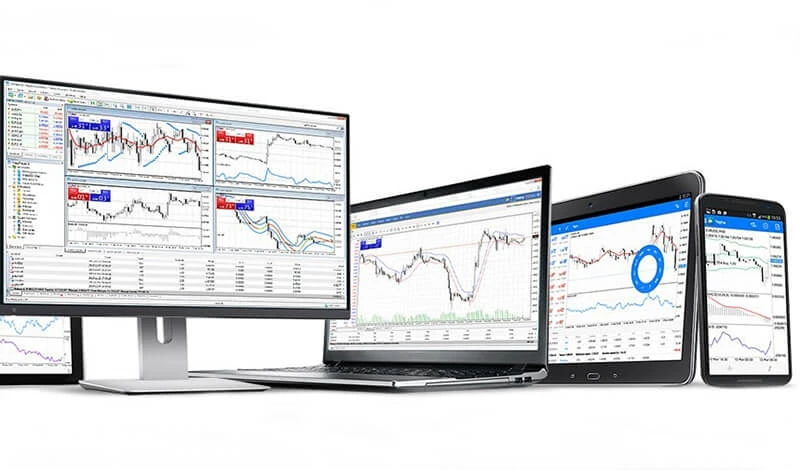
MT4 vs MT5 at NordFX: Direct Comparison
Feature | MT4 | MT5 |
Entry-level account (spread-based) | MT4 Pro — from $10, spreads from 10 pips, no commission | MT5 Pro — from $50, spreads from 10 pips, no commission |
ECN account (raw spread + commission) | MT4 Zero — from $100, spreads from 0.0 pips, 0.0035% per trade | MT5 Zero — from $200, spreads from 0.0 pips, 0.0035% per trade |
Leverage | Up to 1:1000 | Up to 1:1000 |
Tradable instruments | Crypto, metals, currency pairs, energies, indices & stocks | Same range — no difference at NordFX |
Timeframes | Standard set, 1 minute to 1 month | 21 timeframes |
Automation | Expert Advisors via MQL4, largest existing library of ready-made indicators and EAs, plus Copy Trading | Expert Advisors via MQL5, built-in Depth of Market, integrated economic calendar, strategy tester for backtesting on real tick data |
Best for | Traders who want the most tested, widely supported platform with the largest EA ecosystem | Traders who want more built-in analytical tools and deeper backtesting in one terminal |
TradingView
TradingView is widely known for its powerful charting tools and large online trading community. It is primarily a web-based platform and is frequently used by traders who focus heavily on technical analysis.
Key Features
- Advanced charting with hundreds of indicators
- Social trading community where users share ideas
- Custom scripts using Pine Script
- Cloud-based charts accessible from any device
Pros
- Extremely intuitive interface
- Strong charting and visualization tools
- Cross-platform accessibility
Cons
- Some features require a paid subscription
- Limited direct brokerage integration
cTrader
cTrader is designed primarily for ECN trading and focuses on transparency and fast execution speeds. It is often favored by experienced traders and scalpers.
Key Features
- Direct market access with Level II pricing
- Advanced charting tools
- Algorithmic trading through cAlgo
- Customizable interface
Pros
- Transparent pricing structure
- Fast order execution
- Clean and modern interface
Cons
- Supported by fewer brokers compared to MetaTrader platforms
- Smaller developer and user community
ZuluTrade
ZuluTrade is a platform focused on social and copy trading. Instead of trading independently, users can follow experienced traders and automatically copy their strategies.
Key Features
- Social trading network
- Performance rankings of signal providers
- Risk management customization
- Integration with multiple brokers
Pros
- Easy entry for beginners
- Ability to diversify strategies by copying multiple traders
- User-friendly platform design
Cons
- Performance depends heavily on selected signal providers
How to Choose a CFD Trading Platform
Selecting the right trading platform depends on your trading goals and personal preferences.
First, consider your trading style. Day traders and scalpers often require fast execution speeds and advanced charting tools. Long-term traders may focus more on market analysis tools and risk management features.
Second, evaluate the platform's usability. A clear interface, customizable layouts, and easy navigation can significantly improve your trading experience.
Third, test the platform whenever possible. Many brokers offer demo accounts that allow traders to explore features and practice strategies without risking real money.
Choosing the right platform is not just a technical decision—it is an important step in building a consistent and disciplined trading approach.

Why Does NordFX Choose MT4 and MT5 Platforms?
Trading platforms are a critical part of the trading environment. NordFX offers both MetaTrader 4 and MetaTrader 5 because they provide a reliable and flexible foundation for traders of all experience levels.
Proven Reliability
MT4 and MT5 have been used by millions of traders worldwide for many years. Their stability and performance make them suitable even during periods of high market volatility.
Advanced Trading Tools
Both platforms provide extensive technical analysis tools, automated trading features, and customizable indicators. These capabilities allow traders to build strategies that match their individual trading styles.
Accessibility Across Devices
MT4 and MT5 are available on desktop computers, web browsers, and mobile devices. This allows traders to monitor markets and manage positions from virtually anywhere.
Strong Trading Community
The MetaTrader ecosystem includes thousands of custom indicators, automated trading robots, and educational resources. This large community helps traders expand their strategies and improve their market analysis.
Minimum Deposit Requirements
Different CFD platforms have different minimum deposit requirements. Some beginner-friendly platforms allow traders to start with relatively small deposits, while professional trading accounts may require larger balances.
Typical minimum deposit ranges include:
Platform | Typical Minimum Deposit | Target Users |
MetaTrader 4 | Varies by broker | Beginners to professionals |
TradingView | $0 (charting platform) | Market analysis |
cTrader | $100+ | Intermediate traders |
ZuluTrade | $300+ | Social trading users |
Before opening an account, traders should ensure that the deposit requirements match their trading budget and risk tolerance.
Available Account Types
Most CFD trading platforms offer multiple account types designed for different traders.
Standard Accounts
Standard accounts are the most common option and provide access to most markets and tools. They typically feature competitive spreads and straightforward pricing structures.
Pro Accounts
Pro accounts are designed for experienced traders who require tighter spreads, advanced features, and improved execution conditions.
VIP or Premium Accounts
VIP accounts often offer exclusive benefits such as personalized support, advanced analytics tools, and lower trading costs.
Demo Accounts
Demo accounts allow traders to practice using virtual funds. They are extremely useful for beginners who want to learn the platform and test strategies without financial risk.
Islamic Accounts
Islamic or swap-free accounts are designed for traders who follow Sharia finance principles. These accounts remove interest-based overnight fees.
Mini or Micro Accounts
Mini and micro accounts allow traders to open smaller positions with lower capital requirements, making them ideal for beginners.
Tradable Assets
One of the advantages of CFD trading platforms is the wide range of markets they offer. Traders can diversify their strategies across multiple asset classes.
Indices
Indices CFDs allow traders to speculate on the performance of entire stock markets. Popular indices include the S&P 500, FTSE 100, and Nikkei 225.
Stocks
Stock CFDs allow traders to trade the price movements of major companies without owning the shares. This also enables short selling during declining markets.
Currency Pairs
Forex CFDs provide access to the global currency market. Major pairs such as EUR/USD and GBP/USD are among the most actively traded instruments.
Commodities
Commodity CFDs include assets such as gold, silver, oil, and agricultural products. These markets often react strongly to geopolitical events and economic data.
Cryptocurrencies
Crypto CFDs allow traders to speculate on the price movements of digital assets like Bitcoin and Ethereum without needing a crypto wallet.
Leverage Requirements
Leverage allows traders to control larger positions with a relatively small amount of capital.
For example, with 1:100 leverage, a trader with $100 can control a $10,000 position. While leverage increases potential profits, it also significantly increases potential losses.
Because of this, traders should use leverage carefully and always apply proper risk management strategies.
Trading Tools and Features
High-quality trading platforms provide tools that help traders analyze markets and execute strategies effectively.
Technical Analysis Tools
Platforms often include indicators such as moving averages, RSI, MACD, and Bollinger Bands. These tools help traders identify trends and potential entry points.
Automation Capabilities
Many platforms support algorithmic trading through automated scripts or trading robots. These systems can execute trades automatically based on predefined conditions.
Market Data Access
Real-time price feeds, economic calendars, and financial news allow traders to stay informed about important market developments.
Risk Management Tools
Risk management tools such as stop-loss orders, take-profit orders, and margin alerts help traders protect their capital.

Account Funding Options
Most CFD trading platforms offer multiple deposit and withdrawal methods, including:
- Bank transfers
- Credit and debit cards
- Electronic wallets such as Skrill or Neteller
- Cryptocurrency deposits
Traders should check transaction fees, processing times, and regional availability before choosing a funding method.
Features to Look for in CFD Trading Platforms
Choosing the best platform involves evaluating several important features.
User Interface
An intuitive interface allows traders to place trades quickly and analyze markets efficiently.
Asset Variety
Platforms that support multiple asset classes allow traders to diversify their portfolios and explore different market opportunities.
Security Measures
Secure platforms use encryption, two-factor authentication, and segregated client accounts to protect user funds and personal data.
Customer Support
Reliable customer support ensures that technical or account-related issues can be resolved quickly.
Mobile Accessibility
Mobile trading apps allow traders to monitor markets and manage positions even when they are away from their computers.
What Should You Know About CFD Trading?
CFD trading offers many opportunities, but it also carries significant risks.
Leverage Risks
Leverage magnifies both profits and losses. Without proper risk management, traders can lose capital quickly.
Market Volatility
Financial markets can move rapidly due to economic events, news releases, or geopolitical developments.
Overnight Costs
Positions held overnight may incur swap or rollover fees. These costs should be considered when planning longer-term trades.
Successful CFD trading requires discipline, knowledge, and a clear risk management strategy.
FAQ: Best CFD Trading Platform
What is CFD trading?
CFD trading allows traders to speculate on the price movements of financial instruments without owning the underlying asset.
How do I choose the best CFD trading platform?
Look for a platform with strong charting tools, reliable execution, diverse markets, and good security features.
Are CFDs suitable for beginners?
They can be, especially when beginners start with demo accounts and focus on learning risk management.
What are the risks of CFD trading?
The main risks include leverage, market volatility, and overnight holding costs.
Do CFD trading platforms charge fees?
Yes. Typical fees include spreads, commissions, overnight financing fees, and sometimes inactivity fees.
Can I trade CFDs on mobile devices?
Yes. Most major platforms, including MetaTrader and TradingView, offer mobile trading apps.
Can I automate CFD trading?
Yes. Platforms such as MT4 and MT5 allow automated trading through Expert Advisors and algorithmic strategies.
Do CFD platforms provide educational resources?
Many platforms offer tutorials, webinars, market analysis, and demo accounts to help traders improve their skills.
Key Takeaways
- CFD trading platforms allow traders to speculate on price movements without owning the underlying assets.
- Popular platforms include MetaTrader 4, MetaTrader 5, TradingView, cTrader, and ZuluTrade.
- The best platform depends on trading style, tools required, and level of experience.
- Features such as advanced charting, automation, risk management tools, and market access are essential for effective trading.
Meet the Author
Vanessa Polson is a marketing manager at NordFX with over twelve years of experience in online marketing within the financial services industry. She has developed and executed data-driven campaigns across search, social, and display channels in in-house environments. Her work focuses on translating complex financial products and trading tools into clear, practical educational content, giving her a broad and well-rounded view of the global trading landscape.
Connect with Vanessa on LinkedIn.
Go Back Go Back